
Step by step for INSS Calculation
To plan for retirement, it is crucial to understand how the INSS calculates benefits based on contributions made over the years. The INSS uses a formula that takes into account several factors, such as contribution time and the value of contributions. Keep reading to learn more about these factors.
Step 1: Calculation Base
To calculate contributions to the INSS, the first step is to define the calculation basis, which may vary depending on the type of activity of the self-employed worker or the value of the insured person's retirement. After establishing the calculation base, it is necessary to apply the corresponding contribution rate.
The INSS rates for the year 2024 are:
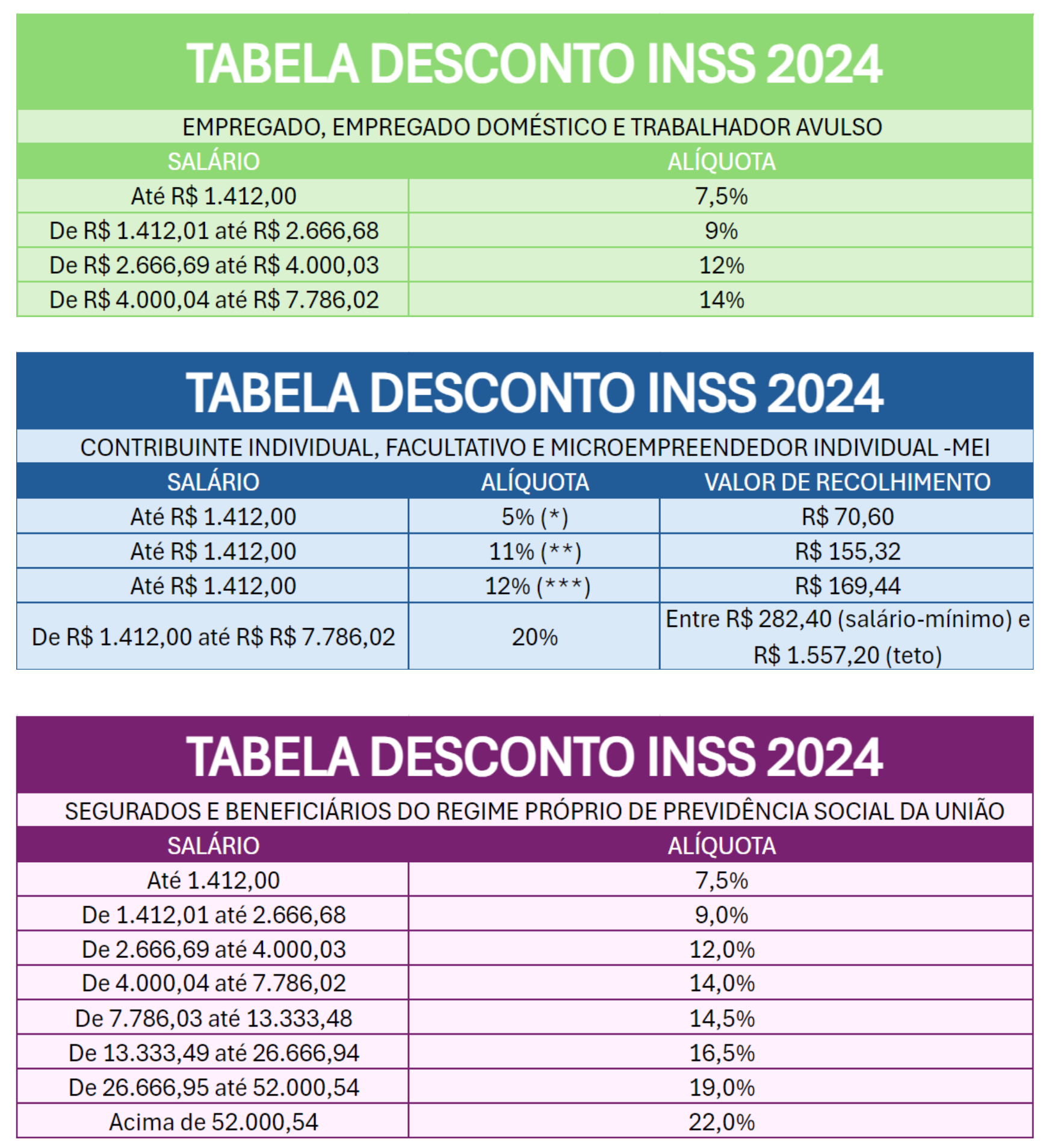
(*) Exclusive rate for the Optional Low Income and Individual Microentrepreneur – MEI;
(**) Exclusive rate of the Simplified Pension Plan;
(***) Exclusive rate for Individual Microentrepreneurs – MEI Autonomous Cargo Transporter – TAC (MEI Truck Driver)
Step 2: Identification of Factors
To calculate your retirement amount, you need to identify some key factors:
- Contribution Time: The total number of years and months you contributed to the INSS.
- Contribution Salary: The monthly amount you contribute to INSS.
- Minimum Wage Number: The average contribution wages that will be considered to determine the value of your retirement.
These factors are essential in determining the value of your retirement and may vary depending on the type of benefit you are seeking.
Step 3: Calculation of the Monthly Contribution
Even before calculating the value of their future retirement, one of the worker's biggest doubts is about the amount to be deducted monthly from their salary, given that, under the CLT regime, there is no fixed payment amount. The contribution must be made monthly, and the sum of contributions over time will directly influence the value of the retirement.
To help you understand the monthly INSS deduction from your salary, in this Practical Guide for INSS Calculation, we will consider two practical examples of INSS calculation, considering one for each salary range: Example 1: R$ 1.412,00, Example 2 : R$ 2.412,00.
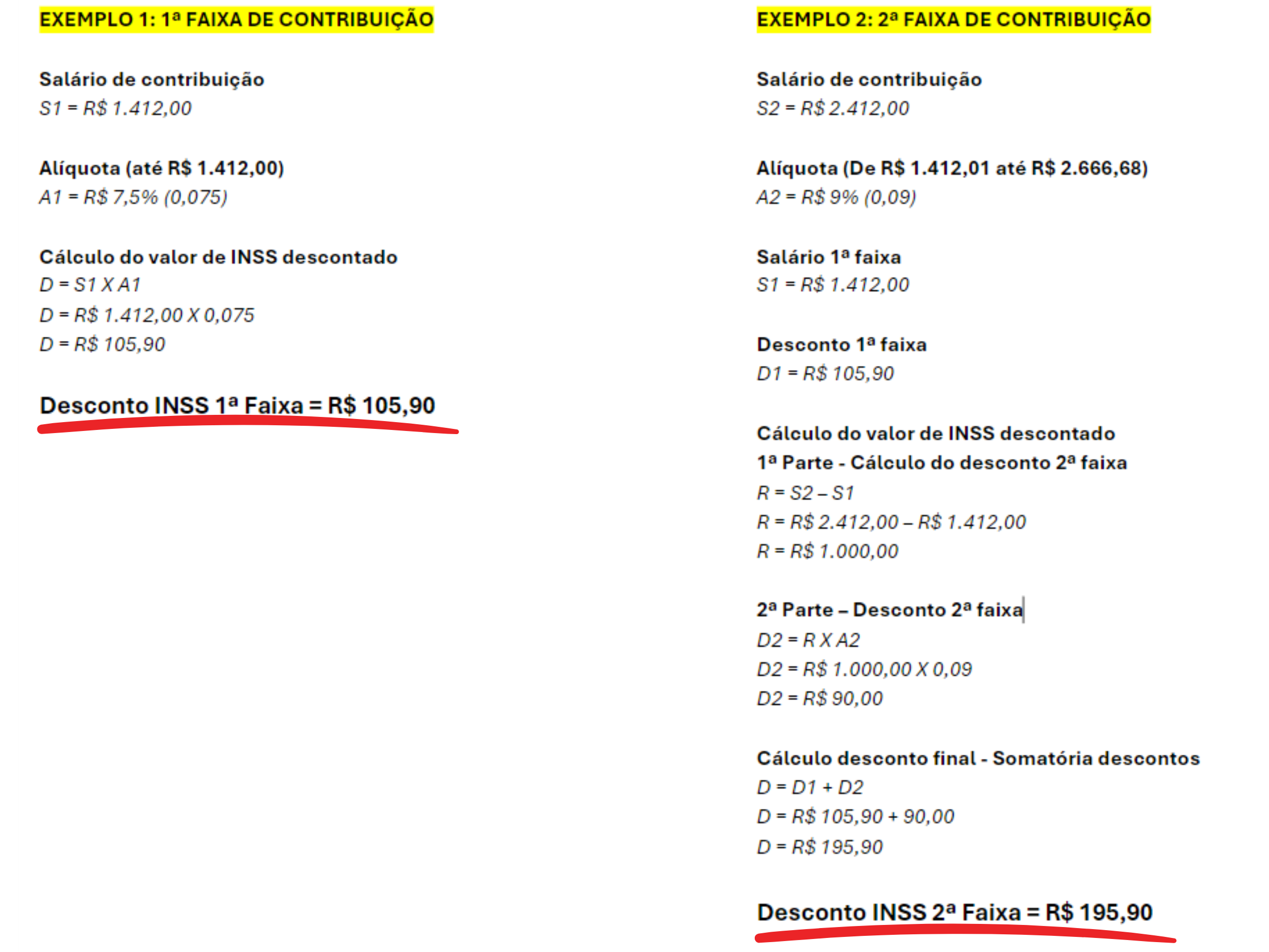
These examples can also be applied to the 3rd and 4th Contribution Ranges, simply considering the difference between the minimum and maximum salaries of the previous ranges to calculate the value to be applied to the corresponding rate, as is done in example 2.