
What is Hair Transplant?
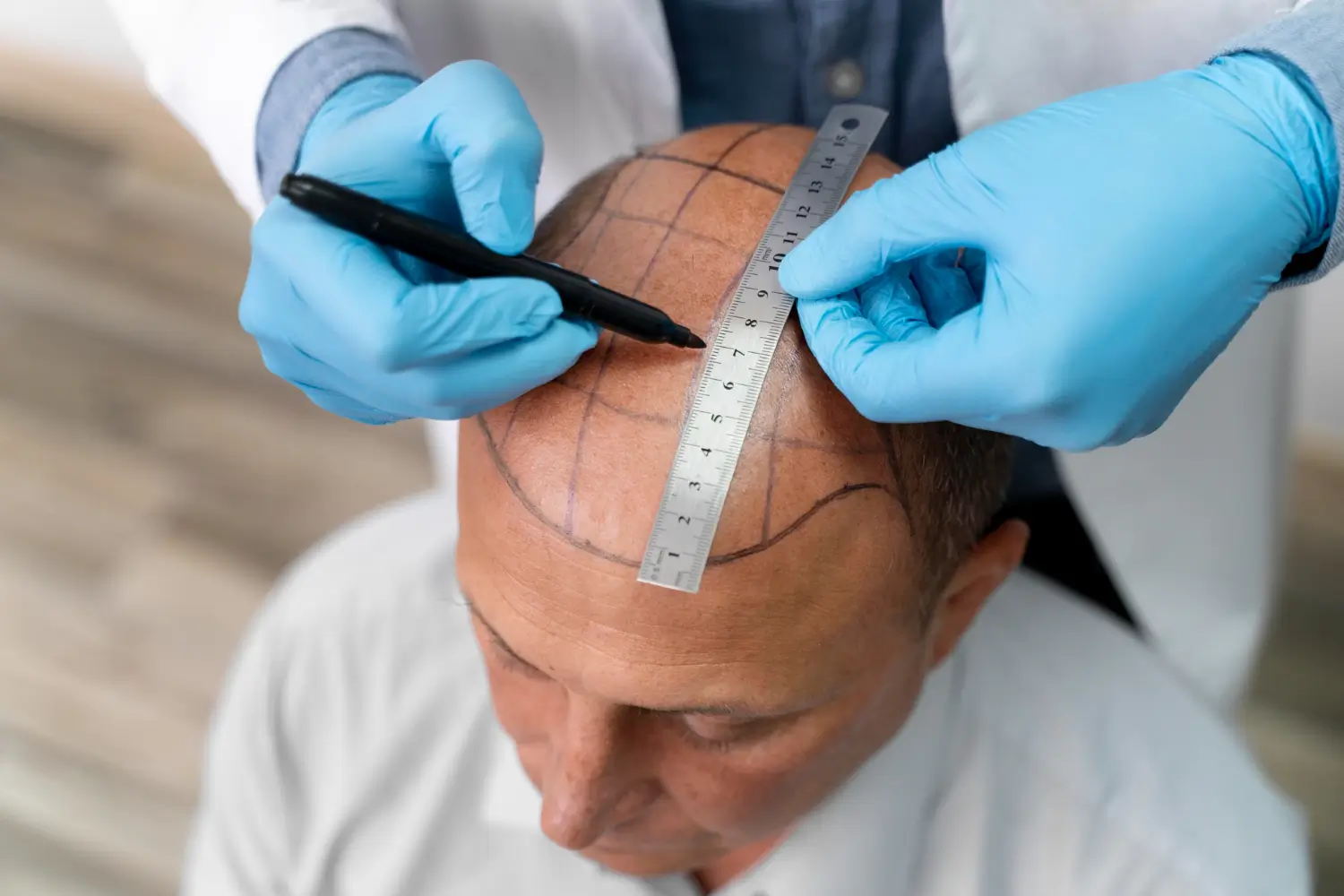
Hair transplantation is a surgical procedure performed to restore hair to areas affected by baldness. This technique involves taking hair strands from a donor area (usually the back of the head) and transplanting them to bald areas or areas with low hair density. The main goal is to create a natural appearance, with strands that grow and behave like the original hair.
There are two main hair transplant techniques: FUSS (Follicular Unit Strip Surgery) and FUE (Follicular Unit Extraction). In FUSS, a strip of scalp is removed from the donor area and divided into follicular units for transplantation. In FUE, the follicular units are removed directly from the scalp through micro-perforations, without the need for cutting. The FUE technique is the most popular currently, as it offers fewer visible scars and a faster recovery process.
Hair transplants are recommended for men and women who are experiencing hair loss at various stages of baldness. However, it is important to note that not everyone is an ideal candidate. An evaluation by a specialist doctor is essential to determine the viability of the procedure, taking into account the extent of the baldness, the health of the scalp and the density of the hair in the donor area.
Advances in Hair Transplantation
In recent years, hair transplants have undergone significant advances, thanks to the evolution of techniques and medical technology. The most notable innovation was the improvement of the FUE technique, which now allows for even more precise and less invasive hair removal. As a result, recovery time has been reduced and the aesthetics of the results have improved considerably.
One of the newest technologies in the field of hair transplantation is the use of stem cells , which has shown promising results in stimulating hair growth. In some cases, these cells can be used to improve the health of existing follicles or even to generate new follicles. Although still in the research and testing phase, the use of stem cells has the potential to transform the treatment of baldness in the coming years.
Another important advancement is the use of hair transplant robots , such as the ARTAS system, which performs follicular unit extraction in an automated and highly precise manner. This robot uses 3D images to map the donor area and ensure that the extracted hairs are of the highest quality, offering more natural results with less damage to the scalp. This technology also allows for faster recovery and less discomfort for the patient.
Benefits of Hair Transplant
The main benefit of hair transplantation is the recovery of self-esteem . For many people, baldness can cause feelings of insecurity and discomfort with their appearance, which can affect confidence in various areas of life. With hair transplantation, patients can return to a more youthful appearance and natural hair density, which significantly improves their self-perception.
Furthermore, hair transplantation offers long-lasting results . Unlike temporary treatments, such as medications or shampoos that only slow down hair loss, hair transplantation offers a permanent solution because the transplanted hairs are taken from areas that are not prone to hair loss, such as the back of the head. This means that, after the procedure, the transplanted hair will continue to grow normally, providing lasting results for life.
Another benefit of hair transplantation is the minimization of visible scarring . With the use of modern techniques, such as FUE, scars become virtually imperceptible, which increases patient satisfaction with the final result.
Hair Transplant Cost: Is It Worth the Investment?
The cost of hair transplantation can vary depending on the technique used, the chosen clinic, and the amount of hair to be transplanted. On average, the procedure can cost between R$ 5.000,00 and R$ 30.000,00 in Brazil, with FUE generally being more expensive due to its complexity and the use of advanced technologies. It is also important to consider the costs of post-operative care, medications, and any necessary touch-ups.
Although hair transplantation may seem like a high investment at first glance, many patients find the cost worthwhile due to the permanent results and regained confidence . Compared to temporary treatments, such as medications that require continuous use, transplantation offers superior long-term cost-effectiveness.
Furthermore, many clinics offer payment plans or financing options, making the procedure more accessible. However, it is advisable to conduct thorough research and choose a reputable clinic that offers proven results and a good track record of success.
Alternatives to Hair Transplant
Before opting for a hair transplant, many patients try other treatment options, which, while not offering permanent results, can provide temporary improvements in hair growth. Among the most common alternatives are medications such as Minoxidil and Finasteride , which help slow hair loss and, in some cases, stimulate growth. However, results may be limited, and treatments need to be used indefinitely for the effects to be maintained.
Another alternative is microneedling , a technique in which small needles are used to stimulate the scalp and promote the growth of new hair. Microneedling is less invasive than hair transplantation and can be combined with other treatments to improve results.
Finally, PRP (Platelet-Rich Plasma) therapy has been gaining popularity. The procedure involves drawing blood from the patient, which is processed to concentrate the platelets and then injected into the scalp. PRP aims to stimulate hair regeneration and the growth of healthier hair.
Post-Transplant Care
After a hair transplant, it is essential to follow a series of precautions to ensure that the results are satisfactory and long-lasting. The recovery process may vary from patient to patient, but in general, the recovery time is relatively short, especially with the most modern techniques, such as FUE.
In the first few days after surgery, it is common for the patient to feel some discomfort, such as swelling and mild pain. Taking medications prescribed by your doctor, such as painkillers and antibiotics, can help alleviate these symptoms and prevent infections. In addition, it is recommended to avoid intense physical activity and direct exposure to the sun in the first few weeks after the procedure.
It is also crucial to follow the instructions on how to wash your hair. During the first few days, your scalp will be sensitive and the transplanted areas need special care. Using a mild shampoo and gently applying water when washing your hair are recommended to avoid dislodging the transplanted follicles.
Another essential precaution is to avoid scratching or rubbing the scalp, which can hinder healing and affect the growth of the transplanted hair. Regular follow-up with your doctor is also important to monitor the progress of the treatment and detect possible complications early.
Patient Testimonials
The experience of those who have undergone hair transplantation can be an important source of inspiration for those who are still unsure about the procedure. Many patients report significant changes not only in their appearance, but also in their confidence and quality of life after the transplant.
“I spent years fighting baldness, I tried everything, but nothing worked. When I found out about hair transplants, I decided to give it a try. The results were incredible! In just a few months, I could see my hair growing back, and the self-esteem I had lost was back,” says João, 38, who underwent the procedure last year.
Maria, 29, shared her experience: “I was really scared about getting a hair transplant, especially because I’m a woman and I thought people would notice the difference. But the FUE technique is so discreet that no one noticed. Today, I’m much happier with my appearance and, best of all, my hair is thicker than ever.”
These testimonials show how hair transplantation can transform not only physical appearance, but also the confidence and self-esteem of those who opt for this treatment.